
Child-Centered Play Therapy (CCPT) is a modality of therapy that can be used with children ages three-ten years old. Based largely on the work of Professors Dr. Garry Landreth & Dr. Dee Ray, CCPT is a non-directive approach that allows children to work through their emotions in a structured environment. According to Dr. Dee Ray, “CCPT utilizes play, the natural language of children, and therapeutic relationship to provide a safe, consistent therapeutic environment in which a child can experience full acceptance, empathy, and understanding from the counselor and process inner experiences and feelings through play and symbol” (Ray, 2011 ) .
Play Therapy
All About Play Therapy
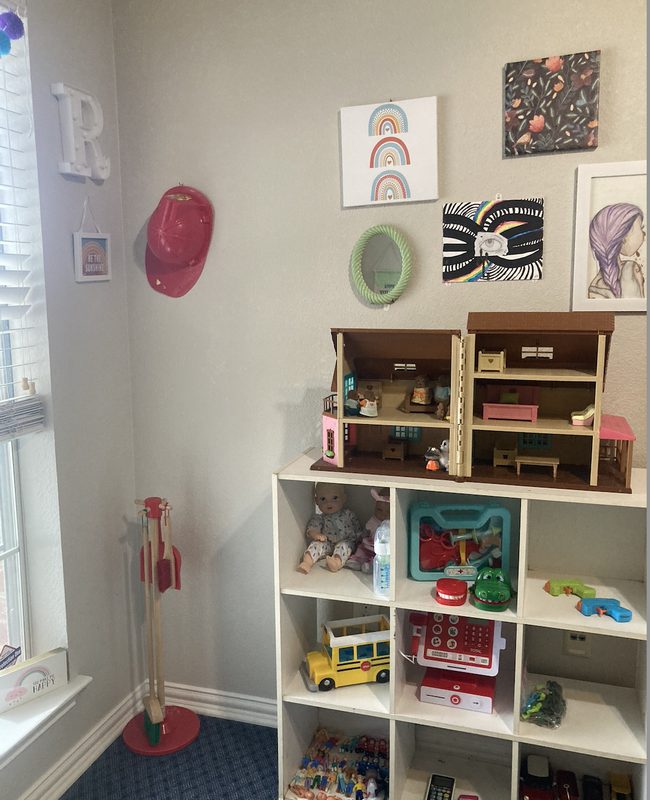
The PlayRoom
In the playroom toys are “selected, not collected.” The playroom can be divided into three major categories (real-life toys, aggressive toys & expressive toys). The therapist will welcome the child into the room and state, “in the playroom you can do many things you like and use the toys in many different ways. If something is not okay, I will let you know.”
Treatment Outline
- Parent Intake Session – The therapist and guardian(s) will go over the child’s psychosocial and educational background.
- Introduction Phase – Child begins to explore the playroom, build rapport with the therapist, and learns limits.
- Resistance Phase – Child may show resistance to coming to play therapy and have escalation of behaviors at home.
- Working Phase – Child begins to better understand their emotions and makes attempts to resolve them.
- Termination Phase – The child’s emotions and behaviors have stabilized and the child has increased their level of confidence.
*Meeting with guardian(s) every 4-6 sessions will allow the therapist and guardian(s) to work together to establish continued care at home*
During The Session
During the sessions, the play therapist will use several techniques such as…
- Tracking: The play therapist serves as the child’s personal announcer, verbalizing each move the child makes to show their presence.
- Reflecting: The play therapist observes what emotional state/reactions the child has during the session and labels them aloud.
- Observing: The play therapist observes recurring themes in the child’s play that could signify challenges they are working through.